Does White Rice Spike Blood Sugar? My CGM Says Yes: +74 mg/dL
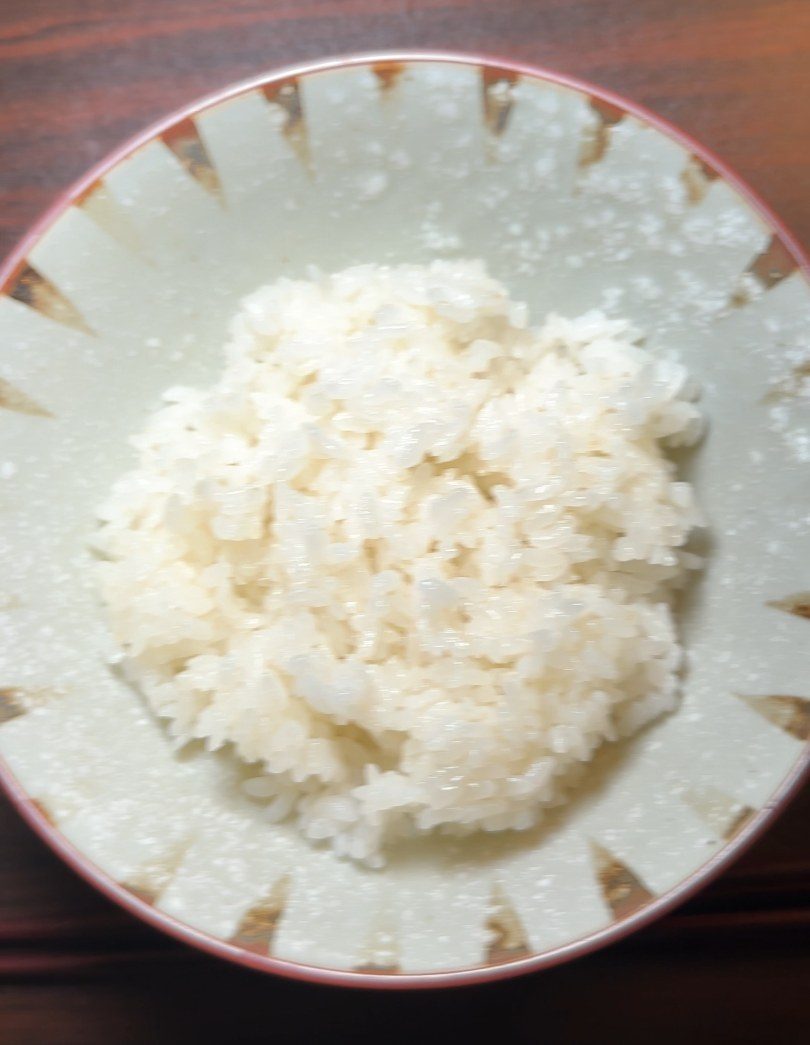
For most people, yes. White rice is almost pure, fast-digesting starch with little fat, protein or fiber to slow it down. On my own CGM, 150g of plain white rice raised my glucose by +74 mg/dL (to a peak of 171 mg/dL about an hour later). How much it spikes you depends on the portion, what you eat with it and in what order, and what you do after the meal.
Rice is the center of the Japanese table. We don’t even have a separate everyday word for “meal” — gohan means both “cooked rice” and “the meal itself.” I’ve eaten a bowl of white rice maybe ten thousand times without a second thought.
So when I started wearing a continuous glucose monitor (CGM), plain white rice was the first thing I wanted to see.
The short answer
Yes — for most people, white rice raises blood sugar quickly. It’s not that rice is “bad.” It’s that polished white rice is close to pure, fast-release starch, with almost nothing riding alongside it to slow it down.
How big the spike is depends on you and on the meal: the portion, what you eat with it and before it, and what you do in the hour after.
My test: 150g of plain white rice
Here’s exactly what I did:
- 150g of freshly cooked white rice (medium grain), warm
- Nothing else — no side dishes, just water
- Empty stomach, 12+ hours after dinner the night before, at rest
- Watched the CGM curve for two to three hours
One hour later, my glucose had climbed to 171 mg/dL. A rise of +74 mg/dL (+4.1 mmol/L).
I didn’t love seeing that. My own line for “that one spiked” is a rise of about 40 — a personal benchmark, not a medical rule. 74 is nearly double. And a peak of 171 sits well above the 140 mg/dL often used as a post-meal reference point.
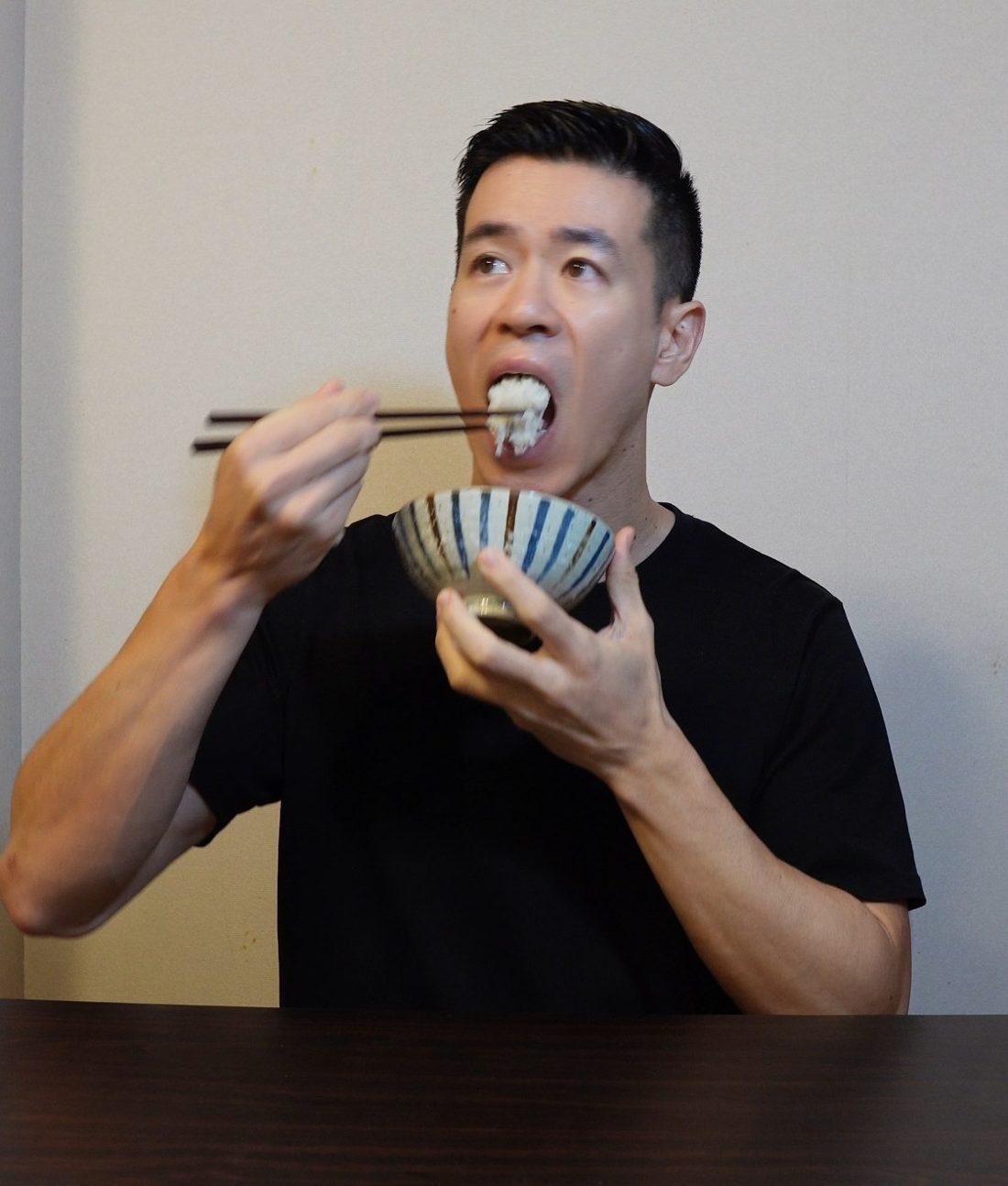
Since then, that same 150g bowl has become my yardstick. Every drink and habit I test gets compared against it.
Why white rice hits so fast
Polishing rice strips off the bran and germ. What’s left is almost entirely starch — mostly amylopectin, a branched form of starch that digestive enzymes break into glucose quickly.
And there’s nothing to put the brakes on:
- Almost no fiber — it was polished away with the bran
- Very little fat or protein — so the rice leaves the stomach fast
- Soft, well-cooked grains — easy for enzymes to reach
The result is one fast wave of glucose. That’s the steep line.
White rice isn’t a poison. It’s a fast glucose delivery with no brakes attached.
Age makes a difference, too. As we get older, insulin often responds a little more slowly, and many of us carry less muscle to pull glucose out of the blood. The same bowl that barely moved you at 25 can draw a steeper line at 50.
What the research says
Glycemic index. The international GI tables list many white rice varieties in the high range — often 70 or more, with a wide spread depending on the variety, the amylose content and how it’s cooked [1]. Sticky, short-grain rice tends to sit at the top.
Long-term intake. A meta-analysis of prospective studies found that people who ate the most white rice had a higher risk of type 2 diabetes, with the link clearest in Asian populations, where rice intake is highest [2]. That’s an association across populations, not proof about any one bowl — but it fits what a CGM shows after a big rice meal.
Meal order. Eating vegetables and protein before carbohydrates produced clearly lower post-meal glucose and insulin than eating the carbs first, in a small study of adults with type 2 diabetes [3]. A Japanese crossover study found the same pattern with fish or meat eaten before rice [4].
Moving after eating. Breaking up sitting with light walking improves post-meal glucose, according to a systematic review and meta-analysis [5]. You don’t need a workout — light movement counts.
Does that mean you should stop eating rice?
I don’t think so. I’m not interested in a life without rice. I’m interested in a body that can handle it.
The same 150 grams can draw a much flatter curve depending on what you do in the minutes around it. Things worth trying:
- Eat vegetables and protein first. Start with the salad, miso soup with tofu, fish or eggs; bring the rice in later.
- Watch the portion. 150g is a normal Japanese bowl. A takeaway rice box can be far more.
- Move after the meal. Even 10–15 minutes of easy walking or light chores.
- Don’t eat it alone. A bowl of plain rice by itself — like my test — is close to the worst case.
- Try a drink before the meal — and measure it. Most of mine did very little (see below).
What I tried before the same bowl
Before testing anything fancy, I tried ordinary drinks right before or with the same 150g of rice:
| Drink (before or with 150g rice) | Rise vs. rice alone |
|---|---|
| Rooibos tea | 10 mg/dL less |
| Coffee | 4 mg/dL less |
| Green tea | 12 mg/dL less |
| Mulberry leaf tea (first test) | 56 mg/dL less (+74 → +18) |
One drink was not like the others. A single cup of mulberry leaf tea five minutes before the rice cut my rise from +74 to +18 mg/dL. One test can be luck, so I went on to test it 43 times — the full story is in Mulberry Leaf Tea and Blood Sugar: What 43 CGM Tests Showed Me.
Follow the experiments
I test one food or habit at a time against the same bowl of rice and publish the curves. The mulberry leaf series starts with a free Episode 0.
The original rice test: Plain White Rice — Blood Sugar Experimentation
A note on reading your own numbers
One CGM reading is one day: sleep, stress, the exact rice and even the sensor all move the line. If you test rice on yourself, keep the portion and conditions the same and repeat it before drawing conclusions.
These are my numbers from my body — yours may look different, and that’s normal. This isn’t medical advice. If you have diabetes or take medication, talk to your doctor before changing how you eat, and if your numbers ever worry you, get them checked.
Sources
- Atkinson FS, Foster-Powell K, Brand-Miller JC. International tables of glycemic index and glycemic load values: 2008. Diabetes Care. 2008;31(12):2281–2283. doi.org/10.2337/dc08-1239
- Hu EA, Pan A, Malik V, Sun Q. White rice consumption and risk of type 2 diabetes: meta-analysis and systematic review. BMJ. 2012;344:e1454. doi.org/10.1136/bmj.e1454
- Shukla AP, et al. Food order has a significant impact on postprandial glucose and insulin levels. Diabetes Care. 2015;38(7):e98–e99. doi.org/10.2337/dc15-0429
- Kuwata H, et al. Meal sequence and glucose excursion, gastric emptying and incretin secretion in type 2 diabetes: a randomised, controlled crossover, exploratory trial. Diabetologia. 2016;59(3):453–461. doi.org/10.1007/s00125-015-3841-z
- Buffey AJ, et al. The acute effects of interrupting prolonged sitting time in adults with standing and light-intensity walking on biomarkers of cardiometabolic health: a systematic review and meta-analysis. Sports Med. 2022;52(8):1765–1787. doi.org/10.1007/s40279-022-01649-4
FAQ
How much does white rice raise blood sugar?
It varies a lot between people and meals. In my test, 150g of plain white rice on an empty stomach raised my glucose by 74 mg/dL, peaking about an hour after eating. Glycemic index tables list a wide range for white rice depending on the variety and how it's cooked, and many common varieties fall in the high-GI range.
Is brown rice better than white rice for blood sugar?
Brown rice keeps its bran and germ, so it has more fiber and usually digests a little more slowly. Large observational studies link higher white rice intake with a higher type 2 diabetes risk, especially in Asian populations, and brown rice tends to compare more favourably. It still raises blood sugar — just often less steeply.
How can I eat white rice without a big spike?
The habits with the best evidence are eating vegetables and protein before the rice, keeping the portion moderate, and moving after the meal — even a short walk helps. In my own tests, a cup of mulberry leaf tea right before the rice also made the rise much smaller.
Is sushi or onigiri better than a bowl of plain rice?
It's still white rice, so the starch is the same. Fish, seaweed, vinegar and side dishes can soften the curve a little, but the portion of rice matters most. Treat sushi and rice balls as rice meals and pair them with protein and vegetables.
Get the next experiment
One food or habit at a time, measured on my own CGM. Every result — including the ones that make me look bad.
Subscribe free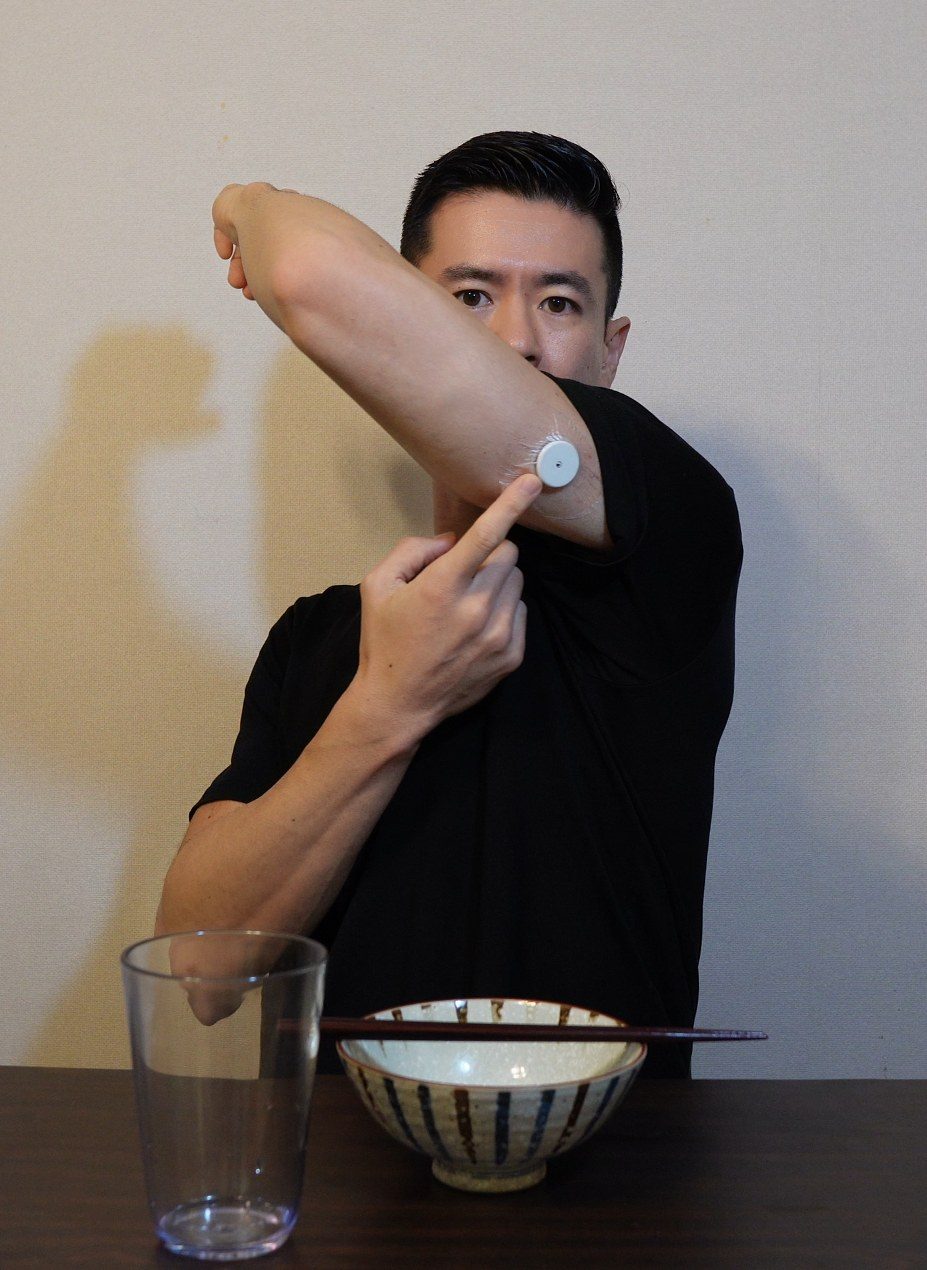
Ash Sato is a sports nutritionist and personal trainer in Japan. He has logged 2,000+ CGM readings testing everyday Japanese foods and habits. More about Ash
These are one person's CGM records and general information — not medical advice. Results vary from person to person. If you have diabetes, take medication, or are pregnant or breastfeeding, talk to your doctor before changing what you eat or drink. How to read this site